In the Sahel, kidnapping is no longer a marginal risk reserved for a few isolated expatriates. In 2025, armed groups kidnapped at least 30 foreign nationals in Mali and Niger, a record according to ACLED, and a single release reportedly earned JNIM nearly $50 million. In 2026, negotiated releases continued, from Mali to southern Libya. This article describes how this hostage economy works, who profits from it and what it changes for the companies, NGOs and institutions that send staff to the region. For the prevention measures themselves, see our guide to reducing the risk of staff kidnapping.
A market that changed scale in 2025
Between 1 January and 28 November 2025, ACLED recorded 30 kidnappings of foreign nationals: 22 in Mali and 8 in Niger. For Mali alone, between May and October 2025, researcher Héni Nsaibia (ACLED) counted at least 22 foreigners kidnapped, possibly 26, “almost double the previous record of 2022”, a year in which 13 foreigners had been kidnapped. The nationalities targeted have changed: Chinese, Indian, Egyptian, Emirati, Iranian, Serbian, Croatian and Bosnian. Westerners, fewer in number on the ground, are no longer the main target.
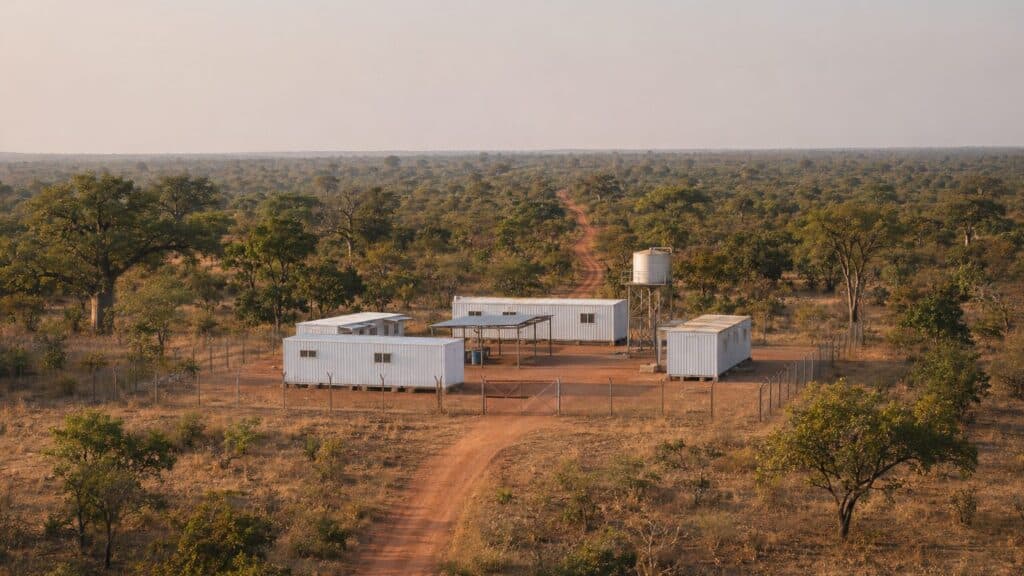
The location of kidnappings has also changed. Most of the 2025 hostages were taken at industrial or mining sites in southern and western Mali (Kayes, Sikasso, Koulikoro and Ségou regions), far from the desert areas where hostage-taking was concentrated in the 2000s and 2010s. The 2026 report of the United Nations Secretary-General notes more than 20 foreigners kidnapped around Bamako and in the south of the country.
| Date | Location | Event |
|---|---|---|
| 23 September 2025 | Sanankoroba, around 40 km south of Bamako (Mali) | Three foreigners kidnapped, including an Emirati national |
| 30 October 2025 | Mali | Release; nearly $50 million paid to JNIM according to Reuters, citing a UN document |
| 7 November 2025 | Mali | Five Indian nationals kidnapped |
| 27 November 2025 | Mali | Six Chinese workers kidnapped; the Chinese embassy calls for illegal gold-panning sites to be closed |
| 11 January 2026 | Kayes region (Mali) | Attack on three factories attributed to JNIM, four civilians kidnapped including a local elected official |
| 20 April 2026 | Mali | Release of two geologists, one Russian and one Ukrainian, kidnapped in July 2024 in the Tillabéri region (Niger) |
| Autumn 2026 | Southern Libya, then Benghazi | Release of two European women kidnapped in Agadez (Niger) in January and April 2025, held according to the press by the Islamic State in the Sahel |
Sources: ACLED, RFI, Africa Defense Forum, Centre 4s, regional press, as of 6 November 2026. Amounts reported by the press, not officially confirmed.
Who kidnaps, and how
JNIM: kidnapping as an economic and political lever
The Group for the Support of Islam and Muslims (JNIM, affiliated with al-Qaeda) is the main actor in Mali. For Héni Nsaibia, its 2025 kidnappings had two objectives: obtaining ransoms and deterring foreign investors from working with Bamako. They are part of the same strategy as the fuel blockade imposed on Bamako since September 2025: striking the formal economy to weaken the state. JNIM also holds several dozen Malian hostages, soldiers, public officials and civilians, whose exact number is not known.
The Islamic State in the Sahel: Western targets and intermediaries
The Islamic State in the Sahel (ISGS, or ISSP) has not kidnapped foreigners in Mali according to ACLED, but has done so in Niger and Burkina Faso, as well as one in Algeria. ACLED describes a shift towards taking “high-value” Western hostages and subcontracting kidnappings to criminal networks. The two European women kidnapped in Agadez in 2025 were reportedly taken by armed men recruited for the operation, then handed over to the group and moved to the Gao region in Mali. A US national was also kidnapped in Niamey on 21 October 2025.
A chain of actors that goes beyond jihadist groups
Between the kidnapper and the payer stand lookouts, transporters, guards and negotiators. The Centre 4s in Nouakchott describes the emergence of a genuine profession of intermediaries, often local notables, who charge for their services by citing delays and risks. This chain overlaps with that of smuggling networks and blurs the line between terrorism and banditry. The 2026 releases also show the role of state or para-state actors: the Malian authorities and Russia’s Africa Corps claimed to have secured the release of the two geologists in April, and the press attributes the handover of the two European women to the entourage of Marshal Haftar in eastern Libya, as with the release of a Nigerien rebel leader in June 2026.
What ransoms bring in
The amounts are by nature opaque: no state acknowledges paying, and public figures come from leaks or UN reports. The available orders of magnitude:
- European countries reportedly paid around $125 million between 2008 and 2014 to free hostages held by al-Qaeda in the Sahel;
- a Security Council report, cited by the Centre 4s, estimates ransoms paid in the Sahel between 2015 and 2025 at more than $400 million;
- the October 2025 release reportedly cost nearly $50 million, plus, according to some sources, military equipment; Reuters, citing a UN document, says the funds mainly benefited JNIM fighters in Mali, but also the al-Qaeda leadership; the United Arab Emirates, named as the presumed payer by regional sources, has confirmed nothing;
- the Institute for Economics and Peace estimates that ransoms could represent up to 40% of JNIM’s annual income.
At this scale, a ransom finances weapons, vehicles, fuel and recruits. It adds to the groups’ other resources: taxation of rural markets, imposed zakat, control of gold panning and trafficking, including arms trafficking.
Watch point
Every ransom paid increases the value of the foreigners still present. The 2026 UN report concludes that the 2025 payments encouraged JNIM to make kidnapping a source of revenue. An organisation must therefore assume that its expatriate staff are perceived as a commodity, whatever their nationality.
Local hostages, the blind spot of the phenomenon
Kidnappings of foreigners make the headlines, but they represent only a small part of the phenomenon. According to a study by researchers at the University of Florida based on ACLED data (17 countries, 2000-2024), the majority of kidnap-for-ransom victims were Westerners until the end of the 2010s; since then, armed groups have mainly targeted local civilians: traders, herders, elected officials, teachers, drivers. In Burkina Faso, Mali and Niger, ACLED counted more than 500 kidnappings for ransom per year in 2022, and more than 200 in 2024. Ransoms there are more modest, but their number makes it a mass economy, which directly affects the national employees, subcontractors and drivers of organisations present.
The phenomenon extends beyond the central Sahel. In Nigeria, where the payment of ransoms is prohibited by law, 303 pupils and 12 teachers were kidnapped from a boarding school in Niger State on 21 November 2025; the pupils were released before 22 December. The bandit groups of north-western Nigeria and the W Park area, on the border between Benin, Burkina Faso and Niger, are two other hotspots being monitored.
What this changes for exposed organisations
1. The site becomes the target. In 2025, kidnappings targeted mining and industrial sites and construction sites, often in areas previously considered less exposed, in southern Mali. Protecting an isolated camp, its access points and its staff rotations follows the same logic as mining site security; journeys to these sites fall under road convoy security.
2. Nationality no longer protects. The targeting of Chinese, Indian, Egyptian or Emirati nationals shows that the criterion is the presumed value of the hostage and the ability of their employer or state to pay, not Western origin. Expatriate protection arrangements must cover all international staff, and exposed national staff.
3. Risk must be reassessed frequently. The geography of kidnappings shifts quickly: southern Mali in 2025, Agadez and Niamey in Niger, criminal subcontracting. A security risk assessment revised at short intervals, based on dated and located incidents, is the foundation of a credible duty of care, including with respect to insurers.
What we do not know
Public data mainly record kidnappings of foreigners; kidnappings of local civilians are largely under-reported. Ransom amounts are never officially confirmed, and the conditions of several 2026 releases remain unknown. Finally, ACLED does not have reliable data on the release of many Chinese and Indian hostages: the number of people still held cannot be established precisely.
Frequently asked questions
How many foreigners were kidnapped in the Sahel in 2025?
ACLED recorded 30 kidnappings of foreign nationals between 1 January and 28 November 2025: 22 in Mali and 8 in Niger. The annual total is probably higher.
Do states pay ransoms?
No state officially acknowledges it. United Nations reports and press investigations nonetheless point to significant payments, including nearly $50 million for a release in Mali in October 2025. Nigeria prohibits the payment of ransoms.
Who are the main kidnappers in the Sahel?
JNIM in Mali, the Islamic State in the Sahel in Niger and Burkina Faso, and criminal networks that kidnap on their own account or to sell the hostage on to an armed group.
How can an organisation reduce its staff’s exposure?
Through a regularly updated risk assessment, travel and site protection procedures, and preparation for crisis management. Our guide to reducing kidnapping risks details these measures.
Sources
- ACLED, “Economic warfare escalates as militants expand beyond the Sahel”, 11 December 2025
- RFI via allAfrica, “Mali: record number of foreigners kidnapped by jihadists”, 14 November 2025
- Centre 4s via allAfrica, “Sahel: the issue of ransom payments”, 26 November 2025
- Africa Defense Forum, “Report shows evolving trend in Sahelian kidnappings”, 27 January 2026
- L’Opinion+, “Sahel: how ransoms finance jihadist groups”, 19 August 2026
Operating a site in this area? See the incident history around your sites in 20 minutes.