On 15 August 2026, the Patriotic Movement for Freedom and Justice (MPLJ) claimed responsibility for an attack on a National Guard camp and a joint police-gendarmerie-customs post in Séguédine, in Niger’s far north-east, claiming to have killed at least fifteen members of the security forces (ActuNiger, 17 August 2026). A few weeks earlier, two armed movements had sealed a coalition in Djado, and the leader of the Patriotic Liberation Front (FPL), just released in Libya, had gathered his fighters at the border. Three years after the July 2023 coup, the rebellion in Niger has once again become a front in its own right, distinct from the jihadist insurgency.
This profile reviews Nigerien rebel groups in 2026: who they are, what they demand, where they operate, what they are capable of, and what this changes for organisations present in the north and east of the country. It complements our profile of Niger’s defence and security forces and our profile of the Islamic State in the Sahel.
The rebellion in Niger at a glance
Since 2023, around half a dozen politico-military movements have claimed to be the armed opposition to the National Council for the Safeguard of the Homeland (CNSP), the junta led by General Abdourahamane Tiani. Most demand the release of former president Mohamed Bazoum, detained since his overthrow, and a return to constitutional order. They are not jihadists: their declared targets are the security forces and the state’s oil resources.
| Movement | Leader | Area of operation | Claimed modes of action |
|---|---|---|---|
| FPL (Patriotic Liberation Front) | Mahmoud Sallah | North-east, Niger-Libya-Chad triangle | Sabotage of the Niger-Benin pipeline (from 2024), remobilisation in Ahahi (July 2026) |
| MPLJ (Patriotic Movement for Freedom and Justice) | Moussa Kounaï | Agadem oil block (Diffa), Bilma department | Attacks on the pipeline and CNPC sites, raids on FDS posts |
| FPJ (Patriotic Front for Justice) | Mahamat Tori | North-east, Djado area | Strategic coalition with the MPLJ (June 2026) |
| FAL (Free Armed Forces) | Rhissa Ag Boula | National claim | Stated objective: overthrow the junta by force |
| CFLN (Coordination of the Free Forces of Niger) | Coalition | North and east | Brings together the FPL, FPJ, MPLJ, MADP and FAL, joined by the MPN in August 2026 |
A rebellion born of the July 2023 coup
Niger experienced armed rebellions in the north in the early 1990s and again in 2007-2009, led mainly by Tuareg movements and brought to an end by peace agreements and integration programmes. The current sequence is different: it begins with the overthrow of Mohamed Bazoum on 26 July 2023 and is structured around a national political demand, constitutional order, rather than a regional one (see the impact of coups on security).
It is nonetheless rooted in local grievances. In the desert north-east, several fronts recruit, according to available analyses, among nomadic and pastoral communities, notably Toubou, who denounce the marginalisation of regions that are rich in oil and gold. The MPLJ’s second-in-command, Brahim Mohamed Hagar, thus criticises Chinese oil operators for almost never recruiting in the region, an observation shared by a former deputy security manager of the Agadem pipeline (Africa Defense Forum, 10 February 2026). On these dynamics, see our analysis of the role of nomadic communities in conflicts.
The regional context also weighs in. The break with France, the departure of US forces from Agadez in 2024 and the rapprochement with Russia have reshuffled the cards (see the impact of the break with France in Niger). Niamey describes the rebels as “mercenaries” and regularly refers to foreign backing, without publicly providing evidence of it.
The main armed movements
The FPL, a forerunner revived by the release of Mahmoud Sallah
The Patriotic Liberation Front emerged in the wake of the coup. It became known in June 2024 by claiming the sabotage of a section of the pipeline that exports Nigerien crude to Benin. The movement then weakened: dozens of its fighters laid down their arms at ceremonies organised by the authorities, and its leader, Mahmoud Sallah, was arrested in early 2025 in southern Libya by Marshal Khalifa Haftar’s Libyan National Army (LNA).
On 22 June 2026, the FPL announced his release, thanking Saddam Haftar. For Jalel Harchaoui, a researcher at the Royal United Services Institute, this was Benghazi’s response to Niamey, which had just sent some twenty Libyans detained in the Zinder region back to Tripoli rather than to eastern Libya (RFI via allAfrica, 24 June 2026). The FPL says fourteen of its members remain in detention in Libya. On 25 July, the eve of the third anniversary of the coup, around a hundred fighters and eighteen pick-ups appeared in Ahahi, where the Nigerien, Libyan and Chadian borders meet, to announce the resumption of armed struggle. Support from the Haftar clan is mentioned by several sources but has not been independently confirmed.
The MPLJ, the most active actor, focused on oil
Created in 2024 by Moussa Kounaï following a split with the FPL, the MPLJ is today the most offensive movement. Its strategy is economic: to strike the junta’s main source of revenue. “Destroying the pipeline means destroying Tiani,” its leader summed up in an interview with Jeune Afrique in January 2026. The movement names the China National Petroleum Corporation (CNPC) and its subsidiary West African Oil Pipeline Company (WAPCO).
Attacks intensified at the end of 2025 (one in November, two in December according to the consultancy African Security Analysis), putting the pipeline out of service several times. In February 2026, the MPLJ attacked the Djibeila oil site in the Agadem block; the Ministry of Defence announced that it had repelled the assault, with the attackers withdrawing towards Chad. On 15 August 2026, it struck Séguédine, in the Bilma department (Agadez region), then on 19 August released a video of soldiers presented as captured. These tolls have not been confirmed by an independent source; drone strikes were reported in the area after the attack.
FPJ, FAL, MPN: the galaxy brought together by the CFLN
The Coordination of the Free Forces of Niger (CFLN), created in October 2024, serves as a common framework. It brings together the FPL, Mahamat Tori’s Patriotic Front for Justice (FPJ), the MPLJ, the Armed Movement for the Defence of the People (MADP) and Rhissa Ag Boula’s Free Armed Forces (FAL). A former Tuareg rebel leader of the 1990s and former minister, the latter founded the Council of Resistance for the Republic (CRR), a political body, after the coup, before being sidelined and launching the FAL.
Two steps marked the summer of 2026. On 28 June, the MPLJ and FPJ signed a communiqué in Djado creating a “strategic coalition” and calling on other groups to join them (Journal du Niger, 29 June 2026). On 1 August, Mahamat Tinaymi’s Patriotic Movement of Niger (MPN) announced it was joining the CFLN, with its fighters due to join common operating bases (Sahel Intelligence, 2 August 2026). The coalition nonetheless remains an assembly of movements with distinct leaders, bases and backers.
Where the rebellion operates: oil and Saharan routes
The geography of the rebellion does not overlap with that of the jihadists. The Islamic State in the Sahel and JNIM concentrate their attacks in the west, in the Tillabéri region and along the Malian and Burkinabè borders (see how Niamey manages insecurity in Tillabéri), while groups descended from Boko Haram weigh on Diffa and the Lake Chad basin. The rebels, for their part, operate in three areas:
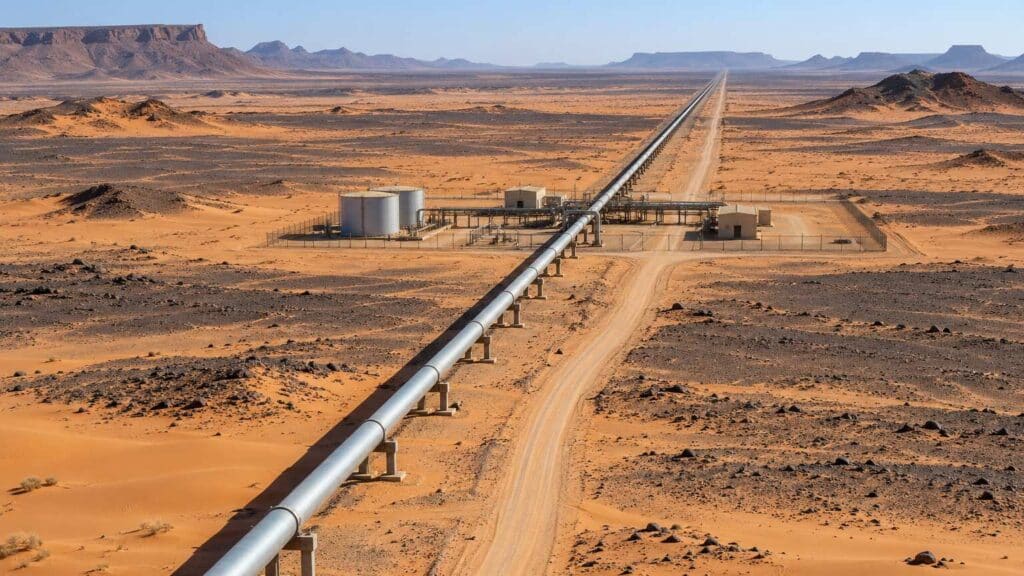
- The Agadem oil block, in the Diffa region, starting point of the Niger-Benin pipeline, which runs nearly 2,000 km to the Sèmè-Kpodji terminal. This is the MPLJ’s centre of gravity.
- Kawar and Djado, in the Bilma department: the oases of Séguédine and Dirkou, the Djado gold-panning sites, and the route to Libya used by migrants and traffickers (see the trafficking routes that fuel conflicts and why artisanal gold attracts armed groups).
- The Niger-Libya-Chad triangle, around Ahahi, where borders are porous and the rebels have rear bases, in southern Libya as well as in Chad according to the Nigerien press.
This area is vast, sparsely populated and far from Niamey. The FDS hold isolated posts there, and it is precisely these posts, such as the one in Séguédine, that are targeted. To situate these areas within the regional threat, see our map of security risks in West Africa.
Capabilities and limits of the rebel groups
Numbers are unknown. Released images show columns of armed pick-ups, and the Ahahi gathering brought together around a hundred FPL fighters. The dominant mode of action is the motorised raid and sabotage: strike fast, seize equipment, withdraw across a border. African Security Analysis describes an approach geared towards economic coercion and political leverage rather than territorial control.
The economic impact is nonetheless real. Each day the pipeline is shut down reportedly costs the state and its Chinese partners around $10 million in revenue, and delays repayment of a $400 million advance granted in April 2024 against crude sales (ADF). Oil is also a diplomatic issue: its export route depends on relations between Niamey and Cotonou that were long deadlocked (see the risks to regional oil and gas pipelines and are major infrastructure projects being targeted?).
The limits are just as clear. The rebellion is fragmented and depends on foreign sanctuaries subject to their hosts’ calculations, as the arrest and then release of Mahmoud Sallah showed. It faces an army that has armed drones and the support of Russia’s Africa Corps (see the drone war in the Sahel). The surrenders obtained by Niamey also show that loyalties remain negotiable.
Then there is the cumulative effect. With jihadist pressure in the west and the Niamey mutiny at the end of August 2026 (see our September 2026 overview), the rebellion opens a third front that forces the FDS to spread their resources across a territory of 1.27 million km².
What this changes for organisations present in Niger
- Energy and oil subcontracting: a named risk. CNPC and WAPCO are explicitly named, but the subcontractors, transporters and service providers in the oil chain, from Agadem to the pipeline corridor, are exposed indirectly. Security arrangements must factor in infrastructure sabotage and hostage-taking (see securing an industrial site in the Sahel and reducing the risk of staff kidnapping).
- Travel in the north and east: a different threat. On the Agadez-Dirkou-Madama routes or towards Agadem, the risk is no longer limited to banditry and trafficking. FDS posts themselves are becoming targets: stopping near a post or travelling in an escorted convoy is not neutral (see road convoy security).
- Do not confuse rebellion with jihadism. The logic, targets and negotiation channels differ. A risk analysis that places all armed actors under the same label misses the signals specific to the rebellion: political communiqués, alliances, mediation, and the state of relations with Libya and Chad.
- Track the political variable. The fate of Mohamed Bazoum, the aftermath of the mutiny and relations with Tripoli, Benghazi and N’Djamena shape the intensity of the front. These parameters fall within employers’ duty of care and crisis management scenarios.
What we do not know
Attack tolls come mostly from the movements themselves and are not verified; the authorities communicate little. Actual numbers, the origin of weapons and the exact nature of external support, Libyan or Chadian, remain to be documented. The cohesion of the CFLN has not yet been tested by a large-scale joint operation. Finally, nothing publicly indicates that Mohamed Bazoum, still in detention, has any link with these groups that claim to act in his name.
FAQ
What is the MPLJ in Niger?
The Patriotic Movement for Freedom and Justice is a rebel group created in 2024 by Moussa Kounaï after a split from the FPL. It demands the release of Mohamed Bazoum and targets the Niger-Benin pipeline, the Agadem oil sites and security force posts, as in Séguédine in August 2026.
Who is Mahmoud Sallah?
He is the leader of the Patriotic Liberation Front (FPL), a movement that emerged after the 2023 coup. Arrested in early 2025 in Libya by Marshal Haftar’s forces, he was released in June 2026 and announced in July the resumption of armed struggle.
Why are the rebels targeting the Niger-Benin pipeline?
Because oil exports are the junta’s main resource. By stopping the pipeline, the rebels seek to deprive Niamey of revenue and to put pressure on the Chinese operators, whom they also accuse of not recruiting locally.
Is the rebellion in northern Niger jihadist?
No. The FPL, MPLJ and FPJ put forward political demands, the release of Mohamed Bazoum and a return to constitutional order, and operate mainly in the north-east. The jihadist groups, the Islamic State in the Sahel and JNIM, are active mainly in the west of the country.
Tracking Niger’s armed actors, area by area
In Niger, the threat is no longer limited to jihadist groups: rebellion, tensions within the army and regional rivalries combine. Sahel Watch helps security managers, NGOs and analysts continuously track incidents, armed actors and political developments in the region, so they can decide on the basis of dated and cross-checked facts.